The laboratory work aims to introduce the LiFi universe usable for communications with IoT equipment, represented by the company pureLiFi.
Using UART-type communications between RPi and Pico, a transmitter module and a receiver module are presented which allow data transfer represented by light fluxes emitted by a high-power LED.
The transmitter is connected to a Web/Linux/RPi server and the receiver to SMpixel/L7+. Research paper1 Research paper2
Hardware: LiFi transmitter, LiFi receiver, SMpixel 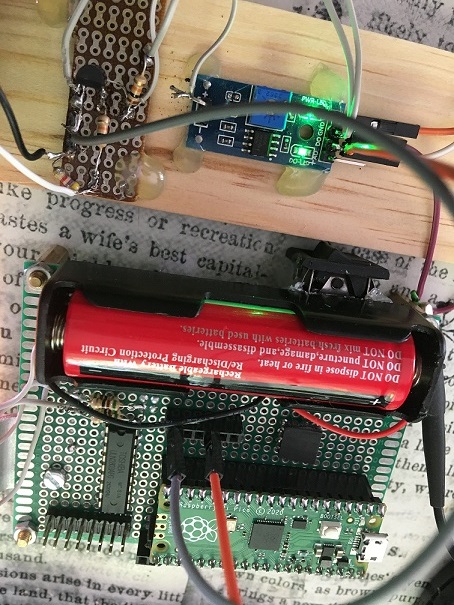
Software: MicroPython
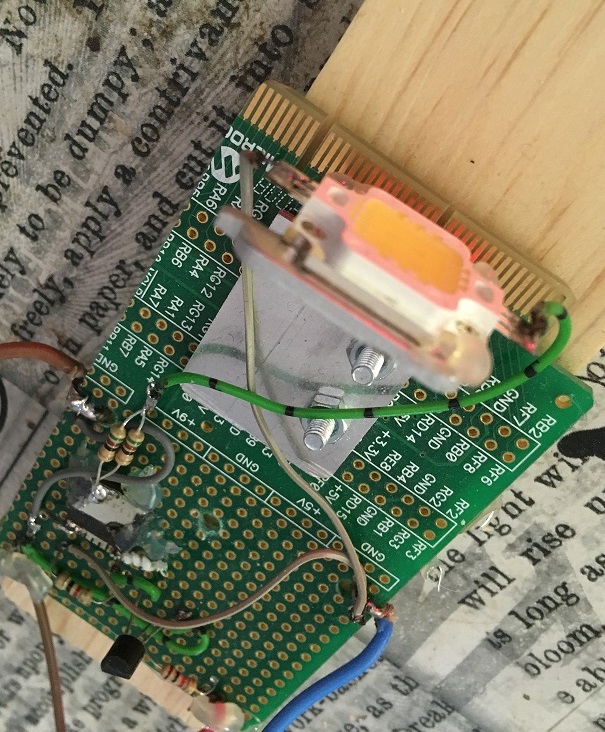
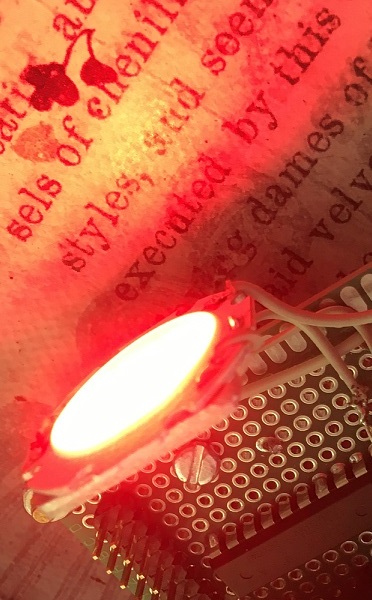
1. Local SMpixel software for LiFi/300bps 2. RPi software for SMpixel test/300bps 3. Web page SMpixel LiFi commander/300bps 4. Character transmission at 300 bps The transmission interface is made of a 3W LED interconnected to RPi through a power module composed of 2 transistors represented in the schematic below. 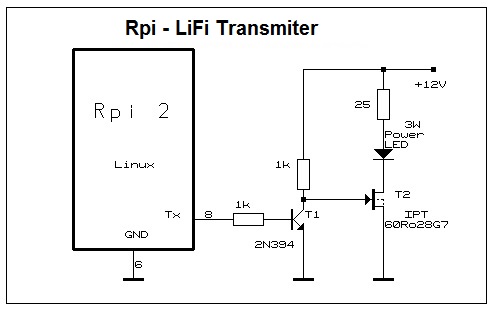
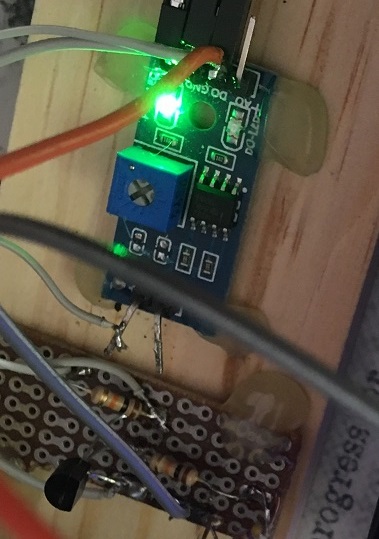
The reception is performed by using an optical sensor of solar generator type provided with an amplification module and a comparator represented in the following figure. 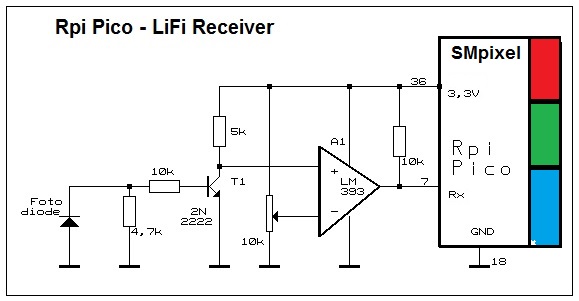
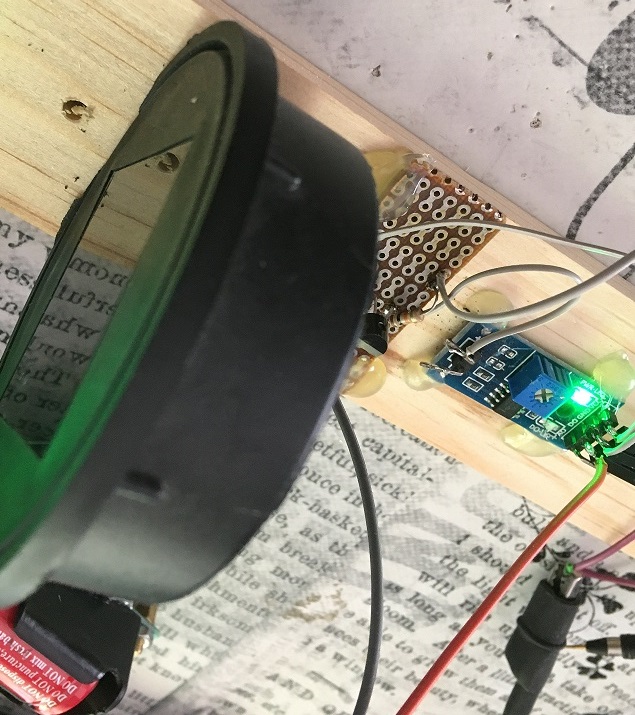
The reception module can be interconnected with an RS232/USB converter and using a terminal program like Teraterm the received characters can be viewed, possibly corrections can be made by the potentiometer at the comparator input to compensate the ambient light level. 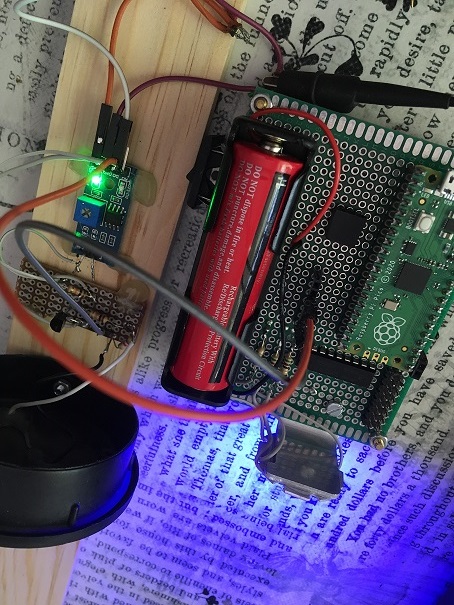
2. Create a Python application that will repeatedly emit the character "U" and view with the oscilloscope the edges of the received signals. 3. Create a LiFi interface that will use Manchester encoding for data. 4. Create an SMpixel extension with simple LiFi interface; 5. Analyze data encoding modes for LiFi transmissions and implement on SMpixel a robust solution.
- Implementation of IoT systems with optical interface; - Development of automotive applications with possibilities of communication through headlight beams; - Development of computer networks in educational spaces and hospitals without the presence of electromagnetic radiation of WiFi type. - Development of communication networks with maximum security for military applications - Implementation of underwater communication systems. 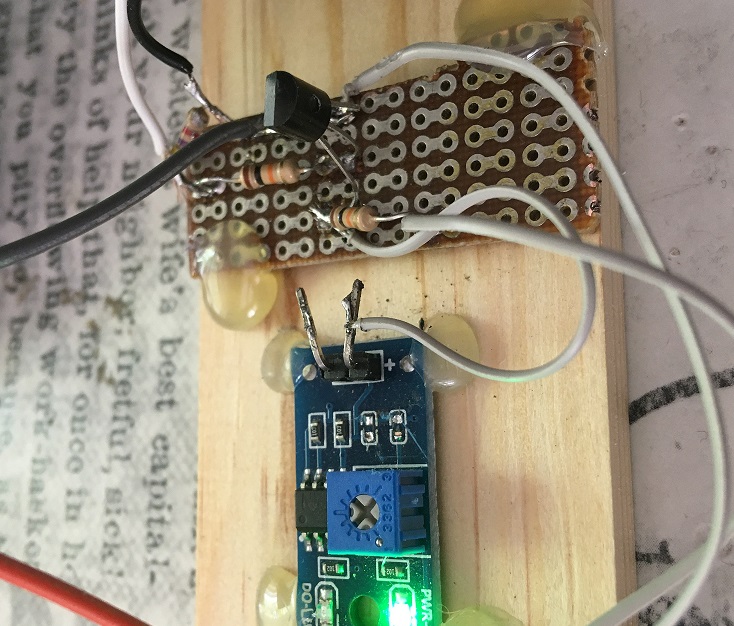
|
 © 2023 - Faculty of Automatic Control and Computer Science